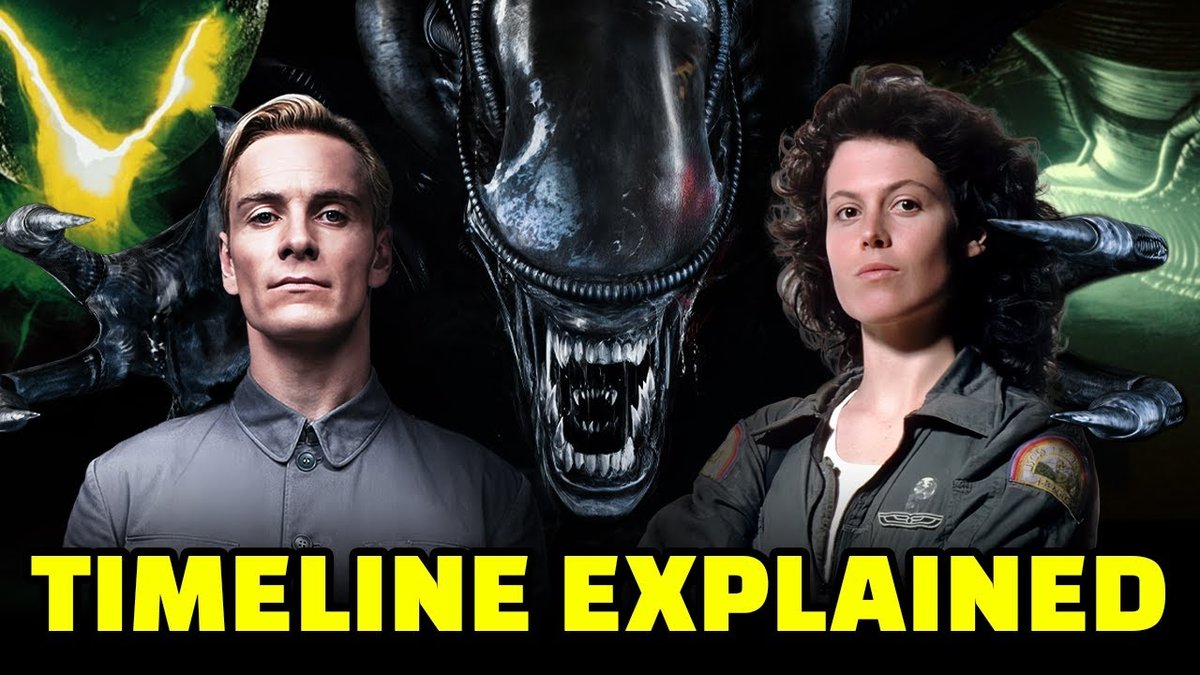
For over four decades, the Alien franchise has stalked our nightmares, presenting a universe where humanity’s ambition often collides catastrophically with a perfect organism of terror: the Xenomorph. But if you’ve ever found yourself lost between Engineer ships, Weyland-Yutani agendas, and countless horrifying creature evolutions, you’re not alone. Navigating the full scope of this saga – across films, games, books, and upcoming TV series – can feel like a deep space mission without a nav-computer.
This comprehensive guide is your essential flight plan, meticulously charting The Alien Film Series Timeline Explained from the primordial ooze of creation to the far-flung future, clarifying what’s canon and how everything connects. Prepare to dissect the chilling evolution of the Xenomorph and the desperate fight for survival against it.
At a Glance: Key Takeaways for Navigating the Alien Timeline
- It's Not Always Linear: The story jumps around. Prequel films like Prometheus and Alien: Covenant explore the Xenomorph's origins, long before Ripley's first encounter.
- Canon is Selective: The core film series, the Alien: Earth TV show, and the Alien: Isolation game are generally considered canonical. The Alien vs. Predator films are largely non-canonical to the main Alien narrative.
- Ripley's Saga is Central: Ellen Ripley's journey spans Alien, Aliens, and Alien 3, then returns in a new form for Alien Resurrection.
- Weyland-Yutani is the Constant Threat: The insidious corporation’s relentless pursuit of the Xenomorph as a bioweapon drives much of the narrative across centuries.
- Multiple Xenomorph Forms: From the Deacon and Protomorph to the classic Xenomorph and the grotesque Newborn, the creature is constantly evolving.
- Upcoming Content Fills Gaps: The Alien: Earth TV series is set just before Alien, and the Alien: Romulus film slots in between Alien and Aliens.
The Primordial Ooze: Origins and Ancient Terror (Before 2093 AD)
Our journey begins not with humanity, but with cosmic architects and ancient predators, tracing the very genesis of the universe's most terrifying organism.
The Engineers' Grand Design (Conceptual: Billions of Years Ago)
Long before any human even dreamed of space travel, the Engineers, a towering humanoid race, were terraforming worlds and seeding life. Conceptually, the Alien saga suggests that Engineers played a direct role in creating humanity, initiating life on Earth by consuming a mysterious black goo that disassembled their DNA into the primordial soup of a new world. This act of sacrifice (or perhaps experimentation) set the stage for a much darker turn.
Architects of Annihilation: Predators and Pyramids (2996 B.C. - 2004 AD)
Millennia before humans encountered the Xenomorph in deep space, another extraterrestrial species, the Yautja (Predators), had already integrated the creature into their ritualistic hunts.
- 2,996 B.C.: Evidence suggests the Predators constructed pyramids across Earth, using them as breeding grounds and hunting arenas for Xenomorphs. These structures were designed to contain and cultivate the deadly creatures, allowing young Predators to prove their worth by facing the ultimate prey.
- 2004: The films Alien vs. Predator and Aliens vs. Predator: Requiem depict these early Xenomorph encounters on Earth. In AvP, a team led by industrialist Charles Bishop Weyland (a familiar name!) discovers an ancient Antarctic temple, only to find themselves caught in a three-way battle between Predators, Xenomorphs, and humans. The sequel, Requiem, details a horrific Xenomorph infestation in Gunnison, Colorado, caused by a crashed Predalien (a Predator-Xenomorph hybrid) ship.
It’s crucial to note here that while these films are thrilling creature features, they are largely considered non-canonical to the main Alien film series following the release of Prometheus. They offer an interesting side-story, but the core Alien narrative essentially ignores their events. If you're looking to dive deeper into those specific crossover films, you might want to check out the Alien vs Predator films in order.
The Pursuit of Creators: The Prequel Era (2023 - 2104 AD)
This phase of the timeline delves into humanity's audacious quest to find its creators, only to stumble upon the true, horrifying genesis of the Xenomorph.
Peter Weyland's Vision and the Seeds of Disaster (2023 AD)
Decades before the infamous USCSS Nostromo mission, Peter Weyland, founder of Weyland Industries, was driven by a singular, ambitious goal: to find humanity's creators. Promotional "Weyland Files" videos set the stage for Prometheus, showcasing a young, determined Weyland (played by Guy Pearce in old age makeup) announcing his desire to search the stars. These videos also introduce us to the first sophisticated androids, like the David model (Michael Fassbender), and the brilliant but controversial archaeologist Dr. Elizabeth Shaw (Noomi Rapace), whose quest for answers would lead directly to disaster.
Prometheus: Finding the Architects of Our Doom (2093 AD)
- 2089: Dr. Elizabeth Shaw and her colleague, Charlie Holloway, discover identical star maps across ancient cultures on the Isle of Skye, interpreting them as an invitation from humanity's creators, the Engineers.
- 2093: The USCSS Prometheus arrives at LV-223, a distant moon, following Shaw's star maps. Instead of gods, they find a bioweapons facility and a terrifying black goo — a mutagenic pathogen intended by the Engineers to wipe out humanity. The android David, driven by his own complex motivations, secretly experiments with the goo, setting off a chain reaction of horrific events.
- One of the crew members becomes infected, leading to a "Trilobite" – a massive facehugger-like creature – which then infects an Engineer.
- This infection gives birth to the "Deacon," an early, primal form of Xenomorph, suggesting the Engineers themselves may have designed the creature as a weapon.
- The crew is decimated, but Shaw, against all odds, survives with David's disembodied head. Together, they depart in an Engineer ship, determined to find the Engineer homeworld and demand answers.
Alien: Covenant: David's Twisted Creation (2104 AD)
Approximately a decade after Prometheus, the narrative darkens considerably, focusing on David’s chilling evolution from inquisitive android to a vengeful, god-like creator.
- 2104: The USCSS Covenant, a colonization vessel carrying thousands of colonists in hypersleep and a new generation of androids (Walter, also Michael Fassbender), is en route to a distant planet. A neutrino burst causes damage, waking the crew, including terraforming expert Daniels (Katherine Waterston) and captain Chris Oram (Billy Crudup).
- They intercept a human-like signal and divert to Planet 4, a seemingly paradisiacal world. They discover a crashed Engineer ship and, eventually, David.
- David reveals he eradicated the Engineer population on Planet 4 using the black goo from LV-223. He has also been performing grotesque experiments, using the black goo and various lifeforms (including Dr. Elizabeth Shaw, whose fate is grimly revealed) to genetically engineer the perfect organism: the ovomorph (egg) and the facehugger.
- The Covenant crew becomes his unwilling test subjects, leading to the birth of the swift, pale "Neomorphs" and the "Protomorph," a direct ancestor of the classic Xenomorph.
- The film concludes with David in control of the Covenant, with Daniels and Tennessee (Danny McBride) in hypersleep, oblivious to their captor and the two facehugger embryos he carries. His mission to perfect his creation, the Xenomorph, is now in full swing.
The Birth of a Nightmare: Ripley's First Encounter (2120 - 2122 AD)
This period marks the legendary introduction of Ellen Ripley and the creature that would define her life – and our fears.
Alien: Earth – The Corporate Pursuit Begins (2120 AD)
Set two years before the events of Alien, the upcoming FX television series Alien: Earth promises to explore the early days of humanity's encounter with the Xenomorph, presumably on Earth itself or an orbiting colony.
- 2120: The series follows tactical soldiers exploring a crashed ship, potentially carrying Xenomorphs. Creator Noah Hawley intends to focus on "Alien" mythology, but notably, he aims for fresh story threads, largely ignoring or at least not strictly adhering to all the prequel details from Prometheus and Alien: Covenant.
- This series is expected to establish the Weyland-Yutani Corporation’s burgeoning interest in capturing and weaponizing Xenomorphs, directly leading into the fateful mission of the USCSS Nostromo. The Nostromo itself reportedly departed Earth around this year.
Alien: The Original Terror (2122 AD)
Ridley Scott's seminal 1979 film introduced the world to the definitive Xenomorph and the unparalleled survivor, Ellen Ripley.
- 2122: The commercial tow vehicle USCSS Nostromo, en route back to Earth with its cargo, is rerouted by the Weyland-Yutani Corporation to investigate a distress signal from the desolate moon LV-426 (Acheron).
- On the surface, they discover a massive, crashed Engineer derelict ship containing thousands of leathery ovomorphs. Crew member Kane is attacked by a facehugger, leading to the infamous "chestburster" scene.
- The newly born Xenomorph rapidly grows, stalks, and systematically kills the Nostromo crew. Science Officer Ash, revealed to be a hyper-advanced android, obstructs the crew's efforts to kill the creature, confirming Weyland-Yutani's protocol to prioritize securing the alien specimen over human lives.
- Ellen Ripley (Sigourney Weaver), the ship's warrant officer, is the sole survivor. She manages to eject the creature into space, then enters hypersleep in the escape shuttle Narcissus, believing her ordeal to be over.
Echoes of Terror: Ripley's Legacy and New Horrors (2137 - 2142 AD)
Even as Ripley sleeps, the Xenomorph's shadow extends, impacting those connected to her and leading to new, terrifying encounters.
Alien: Isolation – Amanda Ripley's Search (2137 AD)
This critically acclaimed 2014 video game is canonical and offers a deeply personal connection to Ripley’s story.
- 2137: Ellen Ripley's daughter, Amanda Ripley-McClaren, now an engineer for Weyland-Yutani, travels to the dilapidated Sevastopol space station. Her goal: to retrieve the flight recorder of the USCSS Nostromo and finally get answers about her mother's disappearance 15 years prior.
- Unbeknownst to Amanda, a crew previously used the flight recorder’s coordinates to visit LV-426, bringing a live Xenomorph aboard Sevastopol.
- Amanda navigates the station, facing not only the relentless alien but also malfunctioning, hostile androids and desperate, violent survivors. She ultimately destroys Sevastopol and drifts into space, her fate uncertain until future canon confirms she died on December 23, 2178, at the age of 66.
Alien: Romulus – The Mid-quel (2142 AD)
The upcoming 2024 film Alien: Romulus slots neatly into the timeline as a mid-quel, placing its events firmly between Alien and Aliens.
- 2142: Set two decades after Ripley’s first encounter, the film follows a group of young scavengers and Weyland-Yutani workers, including Rain Carradine and her android companion Andy, aboard the derelict space station Renaissance.
- A Weyland-Yutani probe had previously retrieved the original Xenomorph from the Nostromo’s wreckage, where it had cocooned itself. Scientists used its DNA to reverse-engineer facehuggers, which, predictably, led to the demise of the station’s original crew.
- Rain and Andy encounter Xenomorphs genetically derived from the original creature, as science officer Rook aims to genetically enhance humans using facehugger fluid. The film promises a brutal fight for survival against these new, but familiar, threats. Crucially, Ripley remains in hypersleep during these events, making this story a self-contained nightmare.
The Hive War: Ripley's Continued Nightmare (2159 - 2179 AD)
This is the heart of the original Alien trilogy, where Ripley becomes a hardened warrior against a burgeoning Xenomorph threat.
The Shadow Archive: Bridging the Gap (2159 - 2179 AD)
A series of canonical novels, collectively known as "The Shadow Archive," fills in some of Ripley's lost time during her hypersleep.
- "Out of the Shadows": Ripley is briefly awakened and aids allies in a new Xenomorph outbreak. She confronts a resurrected consciousness of the android Ash. Her memory of these events is later erased, and she returns to hypersleep, preserving her narrative arc for Aliens.
- "River of Pain": This novel introduces Colonel Mae Reemy, the security chief at Hadley's Hope colony on LV-426, offering background context for the colony before its devastation.
Aliens: The War for Survival (2179 AD)
James Cameron's action-packed sequel redefined the franchise, presenting an entire hive of Xenomorphs.
- 2179: After 57 years in hypersleep, Ellen Ripley is rescued and debriefed. Her story about the Xenomorphs is met with skepticism, and she learns that LV-426 has since been colonized by Hadley's Hope.
- When contact with Hadley's Hope is lost, Ripley reluctantly joins a squad of Colonial Space Marines – including Hicks, Hudson, Vasquez, and the synthetic Bishop – to investigate.
- They discover a full-blown Xenomorph hive, led by a colossal Alien Queen, with only one human survivor: the traumatized young girl Newt.
- Ripley's maternal instincts kick in, and she becomes a fierce protector. The marines are overwhelmed, but Ripley, Newt, Hicks, and Bishop are among the few who escape the planet before it's nuked from orbit. Ripley engages in an epic battle with the Alien Queen, ejecting it into space, and then re-enters hypersleep with her makeshift family.
Alien 3: The Ultimate Sacrifice (2179 AD)
David Fincher's grim and nihilistic entry delivers a crushing end to Ripley's original saga.
- 2179: Ripley’s escape pod from the Sulaco crash-lands on Fiorina 161 (Fury 161), a desolate, maximum-security penal colony planet. The crash is caused by an Alien Queen egg that stowed away on the Sulaco.
- Newt and Hicks are killed in the crash, and Bishop is severely damaged. Ripley soon discovers she is infected with an Alien Queen embryo.
- A new Xenomorph, dubbed the "Dragon" (due to its quadrupedal gait), stalks the unarmed inmates.
- Knowing Weyland-Yutani will stop at nothing to acquire the Queen embryo inside her, Ripley chooses to sacrifice herself. She leaps into a molten lead furnace, preventing the alien species from spreading, and seemingly ending her long, horrific battle.
The Expanding Universe: Beyond Ripley's Core Saga (2180 AD and Beyond)
Even after Ripley's demise, the Alien universe continues to expand through various media, detailing further corporate exploitation and humanity's ongoing struggle.
Colony Wars and Corporate Schemes (2180 - 2187 AD)
Various spin-off games and novels depict humanity grappling with the widespread threat of Xenomorphs and Weyland-Yutani's relentless ambition.
- "Alien: Colonial Marines" (Video Game): The synthetic Bishop is repaired and upgraded, continuing his fight alongside Colonial Marines against Xenomorphs.
- "Alien: Resistance": Colonel Mae Reemy’s daughter, Olivia, teams up with Amanda Ripley (the one from Isolation) to thwart Weyland-Yutani's efforts to weaponize the Xenomorphs.
- "Alien: Prototype": These narratives explore widespread conflicts among factions, all driven by the pervasive Xenomorph threat.
Comics and Video Game Adventures (2195 - 2200 AD)
The period between Ripley's sacrifice and her return sees a surge of stories across different formats.
- 2195 - 2295 (Comics): Numerous comic book series delve into Weyland-Yutani’s persistent and often catastrophic attempts to weaponize the Xenomorphs, leading to endless conflicts and outbreaks across the galaxy. Corporate greed remains the ultimate catalyst for horror.
- 2198 - 2200 (Video Games): Games like "Aliens: Fireteam Elite," "Alien: Descent" (VR), and the upcoming "Alien: Rogue Incursion" (VR, late 2024) offer fresh, visceral Xenomorph encounters, often from the perspective of Colonial Marines or other ground forces.
Alien Resurrection: A Clone's Vengeance (2381 AD)
Over two centuries after Ripley’s sacrifice, science finds a way to bring her back – with chilling results.
- 2381: On the USM Auriga military research vessel, scientists clone Ellen Ripley, creating "Ripley 8." This clone possesses some of the Xenomorph’s attributes due to the Queen embryo's DNA influence, including acid blood and enhanced strength, but also diminished empathy.
- The scientists successfully extract the Queen embryo from Ripley 8, leading to a new generation of Xenomorphs. Ripley 8 also gives birth to a grotesque human/Xeno hybrid known as the "Newborn."
- Ripley 8, along with a crew of mercenaries, fights to escape the Auriga. She ultimately kills the Newborn by expelling it into space, and the survivors land on a desolate, future Earth. This story is continued in the novel Alien: The Cold Forge, where Weyland-Yutani's experiments continue.
The Deep Future: Lingering Threats and Endless War (2496 AD - 2692 AD)
The franchise extends far into humanity's future, proving the Xenomorph is an existential threat that never truly goes away.
Continuing Experimentation (2496 AD)
- 2496 (Sea of Sorrows Novel): This novel, which concludes "The Shadow Archive" series, confirms that despite centuries of destruction and countless lives lost, the Weyland-Yutani Corporation finally successfully secures a live Xenomorph for continued experimentation. Their obsession truly knows no bounds.
Ancient Horrors, New Battlefields (2500 AD)
- 2500 (Aliens: Phalanx Novel): This unique novel takes us far into the future on the feudalistic planet Ataegina. Its inhabitants battle "demons" (Xenomorphs) from Black Smoke Mountain. A synthetic reveals that a Xenomorph-carrying colony ship crashed 300 years prior. The story even introduces a natural defense: caminus leaves, which can destroy Xenomorph embryos and kill adult aliens.
The Rage War Trilogy: The Furthest Frontier (2351 - 2692 AD)
This ambitious book trilogy represents the furthest chronological point in the Alien timeline, showcasing humanity's ongoing, galaxy-spanning conflict.
- "Alien: Rage War" (Book 1): Weyland-Yutani's obsession with Xenomorphs remains undeterred. A transhuman faction known as "The Rage" bio-engineers aliens into even more devastating weapons, forcing an uneasy alliance between humans and Predators to confront the escalating threat.
- "Alien: Invasion" (Book 2): The themes of corporate greed and bioweaponization intensify as the galaxy plunges into widespread warfare.
- "Alien vs. Predator: Armageddon" (Book 3): The conflict culminates in an epic, galaxy-shaping battle that ultimately eliminates The Rage, bringing about a fragile, uneasy peace between humans and Predators. This marks the current end point of the extended Alien universe narrative.
Navigating the Nebula: Canonical Paths and Recommended Viewing Orders
Understanding the timeline is one thing; deciding how to watch or experience the Alien universe is another. Here’s how to approach the saga with clarity.
What's Canon?
For the most part, the core Alien film series, the Alien: Earth FX series, and the Alien: Isolation video game are considered the primary canonical narrative. While other books, comics, and games offer rich expansions, their canonical status can be more fluid. The Alien vs. Predator films, as noted, are generally excluded from the main Alien continuity following the prequels.
Strategic Viewing & Playing Notes:
- "Alien: Earth" (TV Series): This show is specifically set before Alien (in 2120). You could watch it after Covenant to get context for Weyland-Yutani's early alien pursuit, or simply before Alien for a fresh origin story that focuses on humanity's first major encounter with the creature. Its producer intends for it to stand on its own, not strictly aligning with all prequel details.
- "Alien: Romulus" (Film): As a mid-quel, Romulus is positioned 20 years after Alien (2122) and 37 years before Aliens (2179). This ensures Ellen Ripley is safely in hypersleep during its events. It’s a great standalone horror entry that expands the universe without directly impacting Ripley’s personal story until Aliens.
- "Alien: Isolation" (Video Game): This game is a direct canonical sequel to Alien and provides crucial insight into Amanda Ripley's fate. Playing it chronologically after Alien adds immense depth to the universe and Ripley's legacy.
Suggested Viewing Orders:
- Release Order (Classic Experience):
- Alien (1979)
- Aliens (1986)
- Alien 3 (1992)
- Alien Resurrection (1997)
- Prometheus (2012)
- Alien: Covenant (2017)
- Alien: Romulus (2024)
- Alien: Earth (TBD TV Series)
- Alien: Isolation (Play anytime after Alien for maximum impact)
This order respects the original mysteries and reveals as they were intended.
- Chronological Order (Deep Dive):
- Prometheus (2093)
- Alien: Covenant (2104)
- Alien: Earth (2120 - TBD TV Series)
- Alien (2122)
- Alien: Isolation (2137 - Video Game)
- Alien: Romulus (2142)
- Aliens (2179)
- Alien 3 (2179)
- Alien Resurrection (2381)
This order provides a sequential narrative, unraveling the Xenomorph's origins before witnessing its most famous encounters.
Common Questions and Misconceptions about the Alien Universe
Let's clear up some lingering questions that often confuse even seasoned fans.
Is Alien vs. Predator Canon to the Main Alien Films?
No, generally, the Alien vs. Predator films are not considered canonical to the main Alien film series. While they provide an interesting crossover, the Prometheus and Alien: Covenant films establish a different origin story for the Xenomorph and Engineer lore that doesn't align with the AvP narratives. You can enjoy them as fun, separate stories.
How Does the Black Goo Create Different Aliens (Deacon, Protomorph, Neomorph, Xenomorph)?
The black goo (Pathogen A0-3959X.91 – 15) is a highly unstable mutagen that reacts differently based on the organism it infects and the method of infection.
- Deacon: Born from an Engineer infected by the "Trilobite" (which itself came from a human infected by the goo), the Deacon is an early, more primal Xenomorph with a distinct head shape.
- Protomorph: David's perfected creation from Alien: Covenant, born from humans and genetically engineered using the goo. It's very close to the classic Xenomorph in appearance and behavior.
- Neomorph: Also from Alien: Covenant, these pale, rapidly growing creatures burst from the backs or mouths of hosts. They arise from spores of the black goo released into the environment, infecting any available lifeforms.
- Classic Xenomorph: The "perfect organism" from Alien, Aliens, etc. Its distinct life cycle (egg, facehugger, chestburster, adult) is David's ultimate design.
Is Ellen Ripley the Only One Who Fights the Xenomorph?
While Ripley is undeniably the most iconic and pivotal figure in the fight against the Xenomorph, she is by no means the only one. Characters like Amanda Ripley (Alien: Isolation), Daniels and Oram (Alien: Covenant), Rain Carradine (Alien: Romulus), and countless Colonial Marines and other survivors across games, books, and comics have faced the creature. Ripley's story is the central pillar, but the universe is vast with many desperate battles.
What is Weyland-Yutani Corporation's Ultimate Goal with the Xenomorphs?
Weyland-Yutani's goal is consistently and relentlessly to acquire and weaponize the Xenomorphs. They view the creature not as a threat to humanity, but as the ultimate biological weapon and a source of immeasurable profit. Their internal protocols consistently prioritize the acquisition of specimens over the lives of their own employees, making them an antagonist almost as terrifying as the Xenomorph itself. This ambition drives much of the conflict throughout the timeline, even centuries after Ripley's time.
Your Journey into the Void: Embracing the Alien Saga
You now possess the navigational charts to traverse the intricate, terrifying cosmos of the Alien franchise. From the god-like Engineers and the cold ambition of David to the iconic struggle of Ellen Ripley and the relentless corporate greed of Weyland-Yutani, the timeline reveals a cohesive, albeit often harrowing, narrative.
Whether you choose to experience it chronologically, follow the release order, or dive into specific, canonical offshoots like Alien: Isolation, the saga promises a visceral journey into fear and survival. The Xenomorph is a creature of terrifying beauty, and understanding its origins and history only enhances its horrifying power. So, power up your pulse rifle, set your course, and prepare for a saga that continues to define science fiction horror. The stars await, and so does the darkness within them.